



My first client once asked me to remove her business name from every page title because she thought it looked “spammy.”
Six months later, her click through rate had dropped by half. That one decision taught me more about branded title meaning than any course ever did.
So what does branded title meaning actually refer to? A branded title is the page title that pairs your main keyword with your company or product name.
Instead of a title like “Best Running Shoes 2026,” a branded version reads “Best Running Shoes 2026 | Deswave.” Search engines and social platforms display this text as the headline for your link, so it carries real weight.
For new founders building a name from scratch, this small habit builds recognition fast. People start to connect a topic with your brand every time they see your title in results.
Over time, that repetition turns casual searchers into loyal visitors who type your brand name directly into Google. That is the real payoff of understanding branded title meaning early in your content strategy.
What a Branded Title Is and How It Works in Search and Sharing
A branded title works quietly in the background of every search result and every shared link. When a search engine crawls your page, it reads the title tag in your HTML code and often uses it word for word in the results list.
If your brand name sits inside that tag, it shows up right there next to your headline.
The same title also controls what appears when someone shares your link on Twitter, LinkedIn, or WhatsApp. Most platforms pull the title tag automatically to build the preview card.
So if your title only says “10 Marketing Tips,” readers have no idea who wrote it. Add your brand name, and suddenly every share becomes a small advertisement for your company.
Search engines also use titles as a ranking signal, matching them against what people type into the search bar. A well-written branded title keeps your target keyword near the front while placing your brand name at the end, usually after a pipe or a comma.
This structure keeps both humans and search bots happy, which is why so many top-ranking pages follow it.
Branded Titles vs Generic Titles: Understanding the Difference
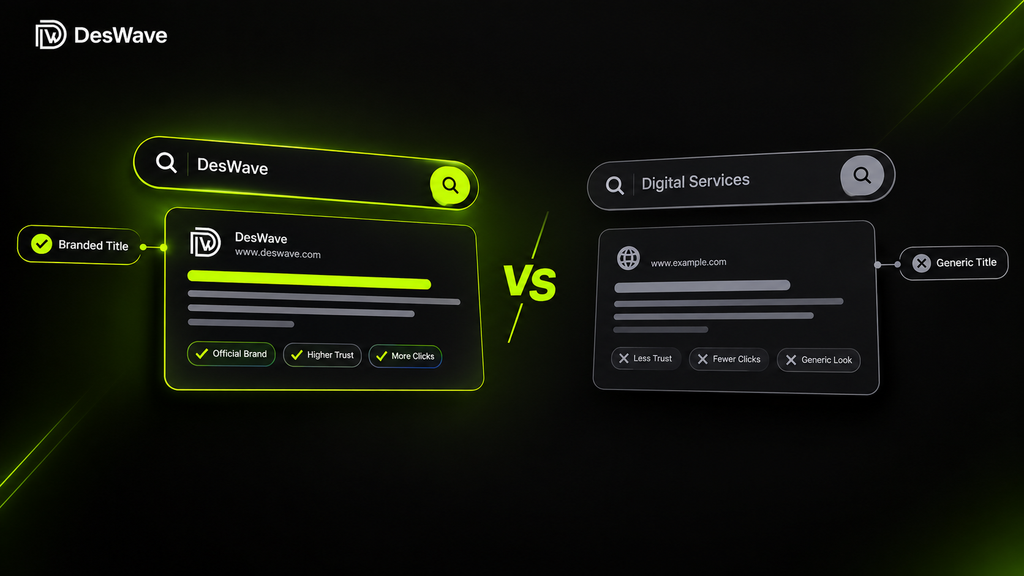
A generic title describes a topic without naming the author. “How to Start a Small Business” tells the reader what the page covers, but nothing about the source.
A branded version, “How to Start a Small Business | Deswave,” gives the same information plus instant credit to the company behind it.
Generic titles can still rank well, especially for brand new sites with no reputation yet. But once your brand starts to gain trust, dropping your name from titles wastes an opportunity that took months to build.
Readers scanning a results page tend to click names they recognize over names they do not, even when the topic looks identical.
There is a middle ground too. Some pages use a semi-branded approach, placing the keyword first and the brand name only on the homepage or main category pages, not every single post.
This keeps blog titles short while still building recognition where it counts most.
The real difference comes down to trust signals. A generic title asks the reader to judge the content alone.
A branded title asks the reader to judge the content and the source together, which almost always favors a business trying to build its online reputation.
Why Branded Titles Improve Click Through Rates and User Trust
People click on names they know. That single fact explains most of the click through rate boost that comes from adding your brand to a title tag. When a reader scrolls through ten blue links, a familiar name jumps out even if the surrounding text looks similar to competitors.
Trust plays a bigger role here than most new business owners expect. A search result with no source name attached can feel a little anonymous, like a random forum post.
Adding a recognizable brand name signals that a real company stands behind the content, which lowers the reader’s guard before they even click.
This effect compounds over repeated exposure. The first time someone sees your brand in a title, they might skip it. The fifth time, they start to notice a pattern. By the tenth time, your name feels familiar enough that clicking becomes the default choice rather than a gamble.
Higher click through rates also send a positive signal back to search engines, since more clicks on your result compared to others in the same position often support better rankings over time.
So branded titles do double duty, pulling in more visitors directly while quietly supporting your position on the results page.
How Branded Titles Support Brand Recognition Across Devices
Your title tag shows up in more places than a typical search result. Voice assistants read it aloud. Browser tabs display a shortened version.
Bookmark folders save it exactly as written. Every one of these touchpoints becomes a small chance to reinforce your brand name in someone’s memory.
Think about how many tabs the average person has open at once. A cluttered browser bar full of generic titles like “Home” or “Untitled Page” gives the reader nothing to hold onto. A branded tab title, even shortened to just your company name, helps people find their way back to your site among a dozen open tabs.
Mobile search results often cut titles short, so placing your brand name at the very end can mean it gets trimmed off small screens.
Many growing brands solve this by testing shorter title formats or moving the brand name earlier for mobile-heavy pages. This small adjustment keeps recognition consistent no matter which device someone uses.
Consistency across every device builds a stronger mental picture of your business.
Readers start to expect your name in a certain spot, and that predictability, oddly enough, makes your brand feel more established than it might actually be yet.
The Role of Branded Titles in SEO Metadata and Consistent Messaging
Title tags sit inside a bigger family of metadata that includes meta descriptions, header tags, and structured data.
When your brand name appears consistently across all of these fields, search engines build a clearer picture of who owns the content and what topics you cover as an authority.
This consistency matters more now that search results pull information from many sources at once, including featured snippets and knowledge panels.
A mismatched brand name, spelled one way in your title and another way in your schema markup, can confuse crawlers trying to connect the dots between your pages.
New entrepreneurs often update their website in pieces, fixing one page at a time, which can leave old titles without any brand name while newer pages include it.
Running a quick audit of every title tag on your site helps catch these gaps before they hurt your rankings or confuse readers comparing pages side by side.
Consistent branded titles also support your written content on other channels, from email subject lines to social captions.
Once a reader learns your naming pattern, every piece of content feels connected, which builds a stronger overall impression of your business across the internet.
Benefits for Social Media Link Previews and Content Discoverability
Every time someone pastes your link into a social post, the platform builds a preview card using your title tag and meta description.
A branded title turns that preview into free advertising, showing your company name to everyone who scrolls past the post, even if they never click through.
Content discoverability also improves because branded titles often perform better in internal site search tools and content recommendation widgets. These tools frequently sort results by relevance and source name, so a clear, branded title helps your content surface higher when readers browse related articles on your own site.
Group chats and forwarded messages carry the same benefit. A friend sharing your article in a group text still shows the branded title as the link preview, giving your name exposure to people who may have never heard of your business before.
This kind of passive reach costs nothing extra beyond the few seconds it takes to write a proper title tag.
For a new brand trying to grow past word of mouth, this steady drip of visibility across social shares adds up fast. Small, consistent exposure often beats one big viral moment that fades within a week.
Branded Title Best Practices for Different Industries
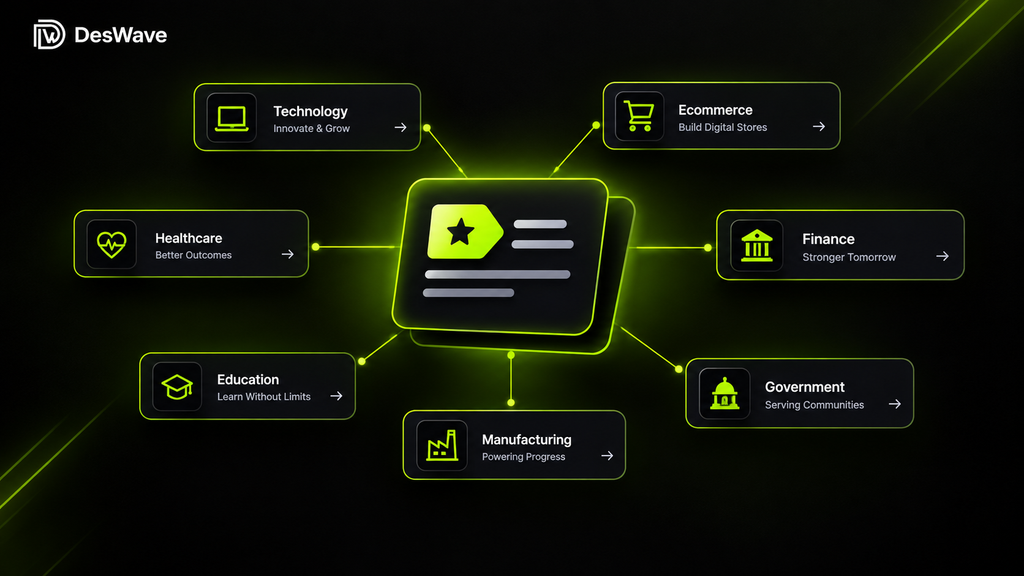
E commerce stores usually place the product name first, followed by a key feature, then the brand name at the end, since shoppers search by product type more than company name. A title like “Wireless Earbuds with Noise Cancelling | Deswave” hits both the search intent and the brand goal in one line.
Service based businesses, such as law firms or consultants, often benefit from leading with the service and city, then closing with the firm name.
This format matches how people actually search for local help, typing phrases like “divorce lawyer Chicago” rather than searching for a firm by a name they do not yet know.
Content and media sites tend to favor a shorter brand tag, sometimes just an initial or short nickname, since their titles change daily and screen space matters.
News outlets often shorten their full name to a few letters or a single recognizable word to save space for the headline itself.
No matter the industry, the keyword should usually come first because it matches search queries, with the brand name acting as a trust signal at the end.
Testing different formats over a few months and tracking click through rates will show which order works best for your specific audience.
Common Branded Title Mistakes to Avoid for Professional Results
Stuffing too many keywords before the brand name is one of the most common mistakes new site owners make. A title like “Cheap Shoes Discount Shoes Buy Shoes Online | Deswave” looks spammy to readers and can hurt rankings because search engines flag repetitive keyword patterns as low-quality content.
Skipping the brand name entirely on every page is another common error, often because founders think it makes titles look cleaner.
This choice throws away months of trust-building, especially once a brand starts gaining recognition among returning visitors who specifically search for that name.
Titles that run too long get cut off in search results, sometimes chopping the brand name right in the middle and leaving something unreadable.
Keeping the full title under about sixty characters helps make sure both the keyword and the brand name display properly across desktop and mobile screens.
Finally, using a different version of the brand name on different pages, such as switching between a full legal name and a shortened nickname, confuses both readers and search engines.
Pick one consistent format early and stick with it across the entire website for the strongest long-term results.
Examples of Strong Branded Titles and What Makes Them Effective
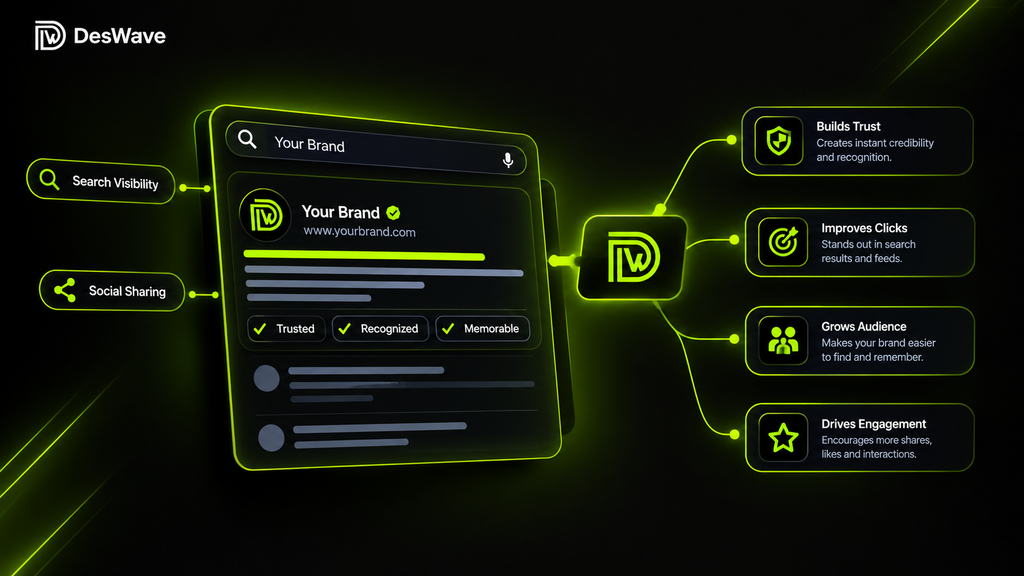
A strong branded title balances three things at once, the target keyword, a clear benefit, and the brand name, without feeling crowded or forced. “Affordable Web Hosting for Small Business | Deswave” works because it answers a search query, states a clear audience, and closes with a recognizable name.
Compare that to a weaker version like “Web Hosting Solutions and Services From Our Company,” which buries the keyword, skips any real benefit, and never names the brand at all. A reader scanning results has no reason to trust or remember a title written this way.
Local businesses often nail this format with titles such as “24 Hour Plumber in Austin | Deswave Plumbing,” combining the exact search phrase a customer might type with a specific city and a memorable brand name.
This kind of specificity tends to outperform vague titles by a wide margin in click through rate data.
Studying titles from top-ranking pages in your own industry, then adjusting the format to fit your brand voice, gives new entrepreneurs a fast, low-risk way to learn what already works rather than guessing from scratch.
Ready to Fix Your Title Tags for Good
Deswave crafts optimized title tags and SEO strategies that turn curious searchers into loyal customers.
Get a Free SEO ConsultationFrequently Asked Questions
The branded title meaning refers to a unique professional job title that includes your company name. Businesses use this to elevate brand authority and clearly link employee roles with their corporate identity online and offline.
A branded title combines a standard job role with your company name, such as Apple Marketing Director. This smart framing showcases your organization directly on professional networks, turning everyday employees into active brand ambassadors everywhere.
A branded title drives instant visibility across social platforms. When your team shares updates, your company name appears automatically. This strategy boosts market presence, attracts top talent, and builds immediate trust with potential clients daily.
It turns every employee profile into a digital billboard. Whenever staff members comment or post online, viewers see your brand name.
Repeated exposure cements your corporate identity in the minds of target audiences very quickly.
Using a branded title increases organic reach, strengthens corporate identity, and improves recruitment efforts.
It also unifies your team under one banner, giving your business a cohesive and professional appearance across competitive digital markets today.
Combine a clear, standard job description with your exact company name, separated by a dash or pipe.
Keep the format concise, ensure it remains easily searchable, and maintain consistency across every single employee profile today.
A regular title only states the job function, like Software Engineer. A branded title includes your company name, like Google Software Engineer.
This extra layer explicitly ties individual work directly to your corporate brand identity.
Common examples include Microsoft Product Manager, Tesla Senior Designer, and Amazon Customer Success Lead.
These titles blend standard professional positions with distinct corporate identities to maximize external visibility on professional networks all year long.