



Listen up. You spend hours writing the perfect blog post. You hit publish. Then you wonder why nobody clicks on your link. The brutal truth? Your search snippet looks like absolute garbage.
You completely forgot the most critical piece of real estate in the search results. The branded title.
Branded Title refers to the link you typically select on Google when searching for information. Honestly, most of us tend to click on the most appealing title we see. As a marketer, it’s important to craft a title that YOU would be motivated to click on yourself.
Think of it as the giant neon sign outside your digital storefront. Without it, you’re just another nameless face in a sea of endless Google results.
A branded title simply slaps your company name at the end of the web page name. It tells users exactly who they’re dealing with before they even click. As we speed through 2026, AI search engines chew up generic tags and spit them out.
If you want to survive the new generative search wave, you need to mark your digital territory. We at Deswave see smart entrepreneurs fail at this basic step every single day. Don’t be that business.
Let’s fix your strategy before AEO completely leaves your website behind. You need authority. You need trust. You need your name front and center.
Fix Your Search Snippets Now
Stop losing clicks to nameless competitors. Get our expert team to restructure your website tags for ultimate visibility.
See how it works in 2 minsUnderstand the Core Definition of a Branded Title Tag in Search Engine Optimization
What exactly are we talking about here? A branded title tag is the clickable headline you see in search results, capped off with your specific company name. It usually sits right in the browser tab.
The structure is dead simple. You place your main keyword first, add a separator like a pipe symbol, and drop your brand name at the very end.
Why does this matter in 2026? Because Large Language Models now read your tags to understand who owns the content. If you leave your name out, the AI has zero reason to credit you as an authority. AEO demands clear ownership.
When a user asks an AI chat a question, the AI looks for trusted sources. Your brand name acts as a trust signal. It proves you stand behind your content. In the EEAT framework, experience and trust reign supreme.
A generic headline screams amateur. A branded one screams confidence. You claim your work. You tell the algorithm exactly who deserves the traffic. Stop playing hide and seek with your own brand identity.
Explore Practical Examples of Branded Titles Across Major Online Brands
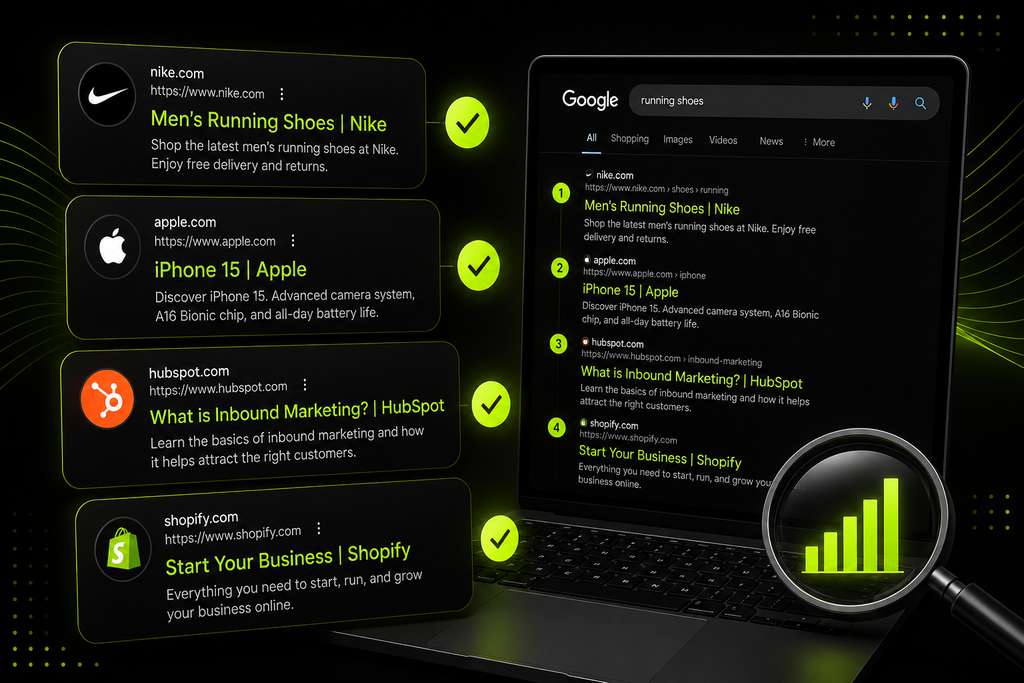
Let’s look at the big players. They never miss a chance to stamp their name on their work. Imagine searching for a new pair of running shoes.
Nike doesn’t just write “Buy Running Shoes.” They write “Men’s Running Shoes | Nike.” That simple addition changes everything. It adds instant credibility.
Apple does the same thing. You search for a phone, and you see “iPhone 15 | Apple.” You know exactly what you’re clicking. Now apply this to your own business.
If you sell software, your tag should say “Best Accounting Software 2026 | YourBrand.”
If you run a local bakery, it should say “Fresh Sourdough Bread in Brooklyn | Brooklyn Bakes.”
Notice how these examples place the important keywords right at the front. The user sees what they want immediately. The brand name sits at the end as a seal of approval. Major brands understand that repetition builds recognition.
Every time their name appears in search, it acts as a free billboard. You should steal this exact strategy for your own website right now.
Discover How Adding Your Brand Name to Page Titles Benefits Search Visibility
Adding your name to page titles directly impacts how many people click your links. We call this the Click-Through Rate. When users scan a crowded search page, their eyes look for familiar names.
If they recognize your company from social media or past visits, they’ll click your link over a generic competitor. Higher click rates tell Google your page is exactly what users want.
In 2026, AI overviews dominate the top of the search page. These AI models prefer pulling information from named, authoritative sources.
By branding your titles, you feed the AI exactly what it craves. You build topical authority. Plus, as your brand grows, more people will search for your specific company name.
If your tags already include your brand, you’ll naturally rank number one for those searches. It creates a massive snowball effect. More visibility leads to more clicks. More clicks lead to higher rankings.
Higher rankings lead to even more visibility. Don’t leave this massive growth opportunity on the table just because you forgot to type your own name.
Learn the Difference Between Branded Titles and Non-Branded Title Structures
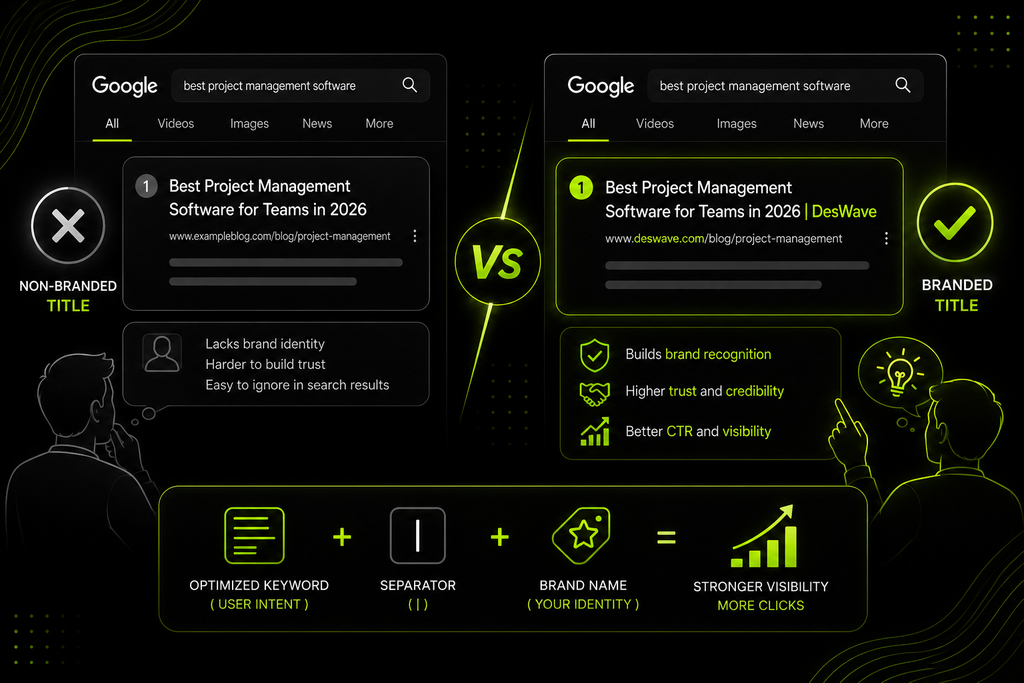
You need to grasp the gap between branded and non-branded structures. A non-branded title focuses entirely on the keyword. It looks like “How to Fix a Leaky Faucet in Five Minutes.” Sure, it answers the question. But it leaves the reader guessing who wrote it.
A branded structure looks like “How to Fix a Leaky Faucet | Bob’s Plumbing.” See the difference? One is a disposable answer. The other builds a relationship. Non-branded tags work fine for hyper-niche questions where nobody cares about the source. But in competitive markets, trust is everything.
EEAT guidelines reward transparency. If a user wants medical advice, they want to see Mayo Clinic or WebMD in the title. They won’t click a nameless blog. The same rule applies to your ecommerce store or SaaS company.
Non-branded titles strip away your unique identity. They turn you into a commodity. Branded titles turn you into a destination. Choose the structure that forces users to remember your name long after they close the browser tab.
Improve Brand Recognition and Click-Through Rates in Search Results
Brand recognition doesn’t happen by accident. You have to force it. Every single search impression is a micro interaction with a potential buyer. If your name appears in the results ten times a week for a specific user, they start to trust you. Familiarity breeds clicks.
When they finally need your product, they’ll skip the ads and scroll straight to your recognizable link. This familiarity directly boosts your Click Through Rate. Search engines track this data relentlessly.
If they see users ignoring the first result to click your branded link in the third spot, you’ll move up. It’s basic algorithm math. Furthermore, generative AI tools summarize content based on who provides the most value.
When you brand your pages, the AI learns to associate your name with high quality answers. Next time someone prompts the AI, it might just recommend your brand by name.
You’re literally training both humans and machines to prefer your business over every single one of your competitors.
Avoid Common Title Tag Errors That Harm Your Search Rankings
People mess this up constantly. The biggest mistake is keyword stuffing. Don’t write “Cheap Shoes Buy Shoes Online Best Shoes | My Brand.” That looks like spam. Google will punish you. AI engines will ignore you.
Keep it clean and natural. Another massive error is making the text too long. Search results only display about 60 characters. If you write a novel, the engine chops it off with an ugly ellipsis.
Your brand name gets hidden. Put your main keyword first, keep the middle brief, and stick your brand at the absolute end. Also, stop using weird symbols. Use a simple vertical pipe or a comma to separate your brand. Those are clean and professional.
Finally, don’t use different brand names across different pages. Pick one name and stick to it. Consistency proves you’re a real entity. If you confuse the search engines, they’ll drop your rankings fast. Audit your website right now and fix these amateur mistakes before they destroy your organic traffic entirely.
Structure Page Titles to Balance Target Keywords and Brand Names
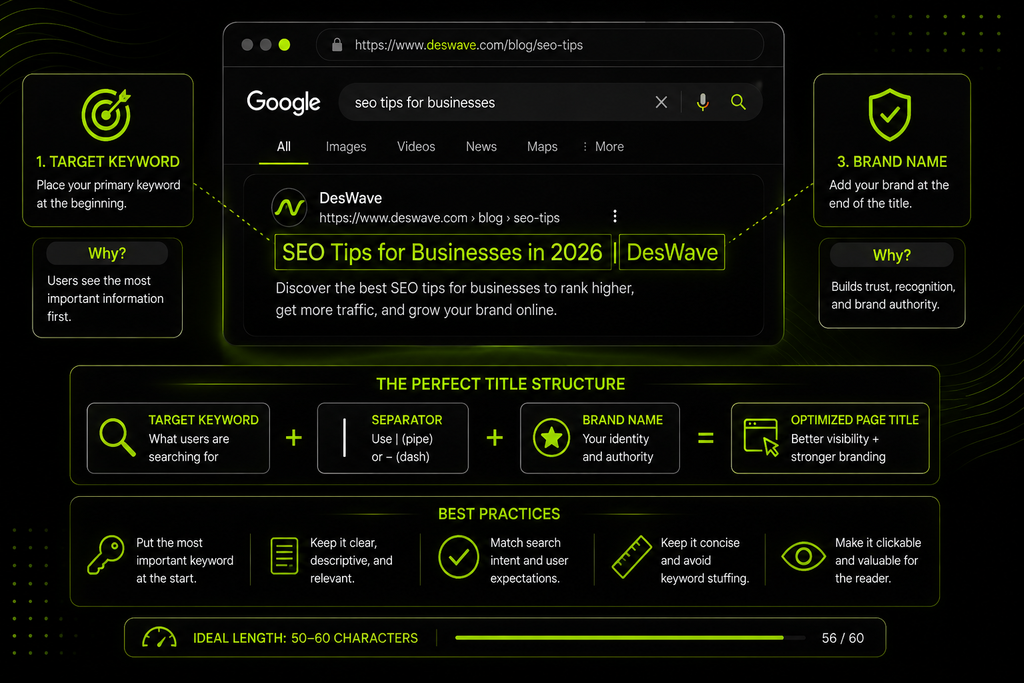
Balance is everything in SEO. You want to rank for the keyword, but you also want credit for the work. The golden rule is simple. Front load the keyword. Search engines give the most weight to the first few words in your tag.
If you sell organic coffee, start with “Organic Fair Trade Coffee.” Then add a specific detail, like “Dark Roast.” Finally, cap it off with your brand. The final product looks like “Organic Fair Trade Coffee | Dark Roast | Deswave.” This structure satisfies everyone. The user sees exactly what they searched for immediately.
The search engine understands the primary topic. The AI recognizes the author. Never put your brand name first unless it’s your homepage or an About page.
If you put your brand first on a product page, you waste that precious early real estate.
EEAT principles require you to be helpful first and promotional second. Give the people the answer they want, then proudly sign your name at the end of the line.
Protect Your Digital Reputation by Ranking for Your Own Brand Name
You must own your brand name in search. If someone searches for your specific company, you’d better show up as the very first result. If you don’t, a competitor will buy ads against your name and steal your leads.
Branded titles act as a massive defense mechanism. By placing your name on every single page, you signal to Google that your website is the ultimate authority on your company. You flood the search results with your own approved content. This pushes down negative reviews, spam sites, and aggressive competitors.
In the age of generative search, LLMs look for consensus. If your website clearly claims ownership of your brand across hundreds of pages, the AI will confidently direct users to you. This is non-negotiable for new entrepreneurs. You work insanely hard to build a reputation.
Don’t let some random website hijack your name because you failed to optimize your tags. Claim your space, defend your territory, and control exactly what people see when they search for you.
Analyze Click Data to Measure the Impact of Branded Search Terms
You can’t improve what you don’t measure. Once you update your tags, you need to track the data obsessively. Open your search console and look at your click metrics. You should see a clear shift.
Track how many people find your site using generic keywords versus branded searches. Over time, your branded search volume should explode. This proves your marketing is actually working. People are remembering your name and searching for it directly.
Compare the click rates of your old nameless tags against your new branded ones. You’ll likely see a massive bump in engagement. AI engines love engagement. When they see users actively choosing your links, they boost your authority scores. This is exactly how you win in 2026.
Data never lies. If a specific page still suffers from low clicks, rewrite the tag. Test different keyword combinations. Keep the brand name at the end, but tweak the front until the numbers go up. Treat your search data like a roadmap to unlimited free traffic and endless new customers.
Implement Modern Best Practices for Writing Clear Search Engine Titles
Let’s wrap this up with actionable rules for 2026.
First, keep every title under 60 characters to avoid truncation on mobile screens. Second, always write for humans first and AI engines second.
Third, ensure your tags directly match the intent of the page. If the page is a guide, use words like “How to” or “Guide.” If it’s a product, state the product clearly.
Fourth, drop the robotic keyword stuffing. Write naturally. Use active voice.
Fifth, make sure your page content actually delivers on the promise made in the title. If you trick users into clicking, they’ll bounce immediately. High bounce rates will tank your rankings faster than anything else.
Finally, stamp your brand name at the end of every single tag using a clean vertical pipe. These simple practices build the foundation of EEAT and AEO. You now have the exact blueprint to dominate the search results. Go update your website right now and watch your organic traffic soar to new heights.
Endnote
Stop letting nameless competitors steal your valuable web traffic. Branded titles fix your search snippets and build instant trust with your target audience. Take control of your digital identity right now.
Partner with Deswave today and watch your organic visibility skyrocket to the very top.
Frequently Asked Questions
If you ask what is a branded title, it simply means adding your exact company name to the very end of your web page headline.
You usually put it right after a vertical pipe symbol.
It means you proudly claim direct ownership of your webpage content.
Instead of just showing a random search result, you tell users exactly who wrote the page before they even decide to click your link.
It builds deep trust with your target audience. When people see your name repeatedly in their search results, they remember you.
This familiarity makes them much more likely to buy products from your website later.
A regular one only shows the main topic or question. A branded version gives the topic and then stamps your business name right at the very end.
This helps separate you from basic nameless competitors.
You get higher organic click rates and better trust. People naturally prefer clicking links from names they recognize.
It also trains search algorithms to connect your specific business with high quality answers in your industry.
Put your main search keyword at the absolute front of the short sentence. Keep the whole thing under sixty characters.
Then put a vertical pipe and drop your company name right at the very end.
Yes, it absolutely can. Every single time someone searches online and sees your name, it acts like a free billboard.
Those tiny impressions add up fast and force people to remember exactly who you are.
Think about huge major retail companies. You will see things like Mens Running Shoes Nike or Buy Smart Phones Apple.
They always show the exact product first and place the trusted company name absolutely last.