




Almost every business owner who contacts us now arrives with something already made.
A logo generated from a prompt. A landing page built in an afternoon. A full site put together on one of the build-it-yourself tools, live, with a domain pointed at it. Two years ago, people came to us with a description of what they wanted. Now they come with a file.
This is not a confession, and you do not need to apologize for it. It is a sensible thing to have done, and in most cases, it has saved you money. But there is a gap between what you have and what a business actually runs on, and almost nobody explains where that gap sits until you are already paying someone to close it.
So here is the honest version, including the parts that argue against hiring anyone.

What the AI draft genuinely got you
Start with credit where it is due, because plenty of design firms will skip this part.
- You know what you want. You have seen your idea rendered, you have reacted to it, and you have opinions now that you did not have before. That is real progress, and it used to take two rounds of paid concepts to get there.
- You have a reference point. Showing someone a thing is faster and more accurate than describing it.
- For a straightforward service business, a single page with your services, your area, your phone number, and a contact form is often genuinely enough to start. If that is where you are, you may not need us at all yet. Spend the money on getting found instead.
- You have discovered which decisions you actually care about. Most people find out they have strong feelings about two or three things and no opinion at all on the rest.
If someone tells you the draft is worthless, they are selling. It is not worthless. It is just not finished, and “not finished” means something specific.
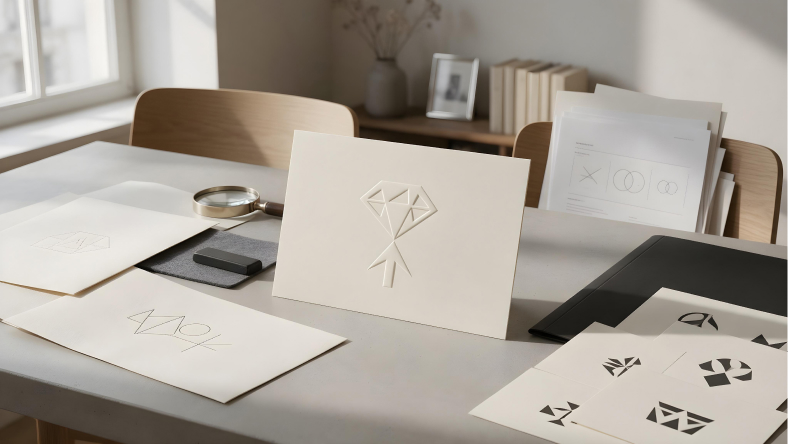
The logo questions most people have never been told about
This is the part that surprises business owners, and it is worth understanding before you print anything.
Copyright and trademark are two different questions, and an AI-generated logo can get two different answers at the same time.
On copyright, US law requires a human author. The Copyright Office has been clear that purely AI-generated material cannot be registered; it set that position out at length in its January 2025 report on copyrightability, and the courts have backed it. The Thaler case went all the way up, and in March 2026 the Supreme Court declined to hear the appeal, which leaves the human authorship requirement firmly in place. Work that an AI produced and a human then meaningfully modified, selected, and arranged can be registrable, but the protection covers the human contribution rather than the raw output.
On trademark, the answer is different and more encouraging. A logo can be registrable and enforceable as a trademark whether a human or an AI drew it, provided it is distinctive, and you genuinely hold the rights to use it. Trademark is about whether a mark identifies your business in the market, not about who held the pen.
Two practical consequences:
- Read the terms of whatever tool you used. Logo generators license their output to you on their terms, and some of those terms do not give you what you would need to register a mark or to stop someone else using something similar. Check before you build a business on it.
- Run a trademark search before you commit. These tools are trained on existing material, which means a generated mark can land uncomfortably close to something already registered in your category. Finding that out after you have printed signage, uniforms, and packaging is an expensive way to learn it.
None of this is legal advice, and we are not lawyers. If the mark matters to your business, an hour with an IP attorney is cheap compared to a rebrand.
Refinement or rebuild, and how to tell the difference honestly
This is the most common disagreement we have with new clients, and it costs people money when it is handled badly.
You built a site. You think it needs polish. Sometimes that is exactly right and a few hundred dollars of work gets you where you want to be. Sometimes what looks like polish is actually a rebuild, because the thing underneath cannot do what you are about to ask of it.
The difference is usually not visible from the front. Here is how to check before you ask anyone for a quote:
- Can a non-technical person on your team change the opening paragraph without calling anyone? If not, you will be paying someone forever for text edits.
- Fill in your own contact form and see whether the message arrives in an inbox you actually check. A surprising number do not.
- Open it on your phone on mobile data, not on Wi-Fi, and count how long until you can read something. Most of your visitors are arriving this way.
- Search your own business name. If you cannot find yourself, check whether the pages have real titles and descriptions or whether every page is called Home.
- Click into the pages nobody looks at. Placeholder text sitting live on a secondary page is extremely common, and it is the first thing a careful customer notices.
- Ask yourself whether you can export it. Some tools make it easy to leave, and some make it nearly impossible, and that determines whether anyone can work on it later without starting over.
- Check whether you have the legal pages your business actually needs, and whether anything you collect is handled properly.
- For your logo, find out if you have a vector file or only a PNG. If it is only a PNG, you cannot put it on a sign, a vehicle, or anything embroidered without it falling apart.
Items one, six, and eight are the ones that decide refinement versus rebuild. A site that nobody can edit, nobody can export, and that carries a logo in the wrong format is not eighty percent done. It is a good-looking prototype, and a prototype is a different thing from a product.
That distinction is not a criticism of what you built. Prototypes are supposed to look finished. That is what makes them useful.
The trap nobody warns you about
Here is something we have noticed that works against our own interests to tell you.
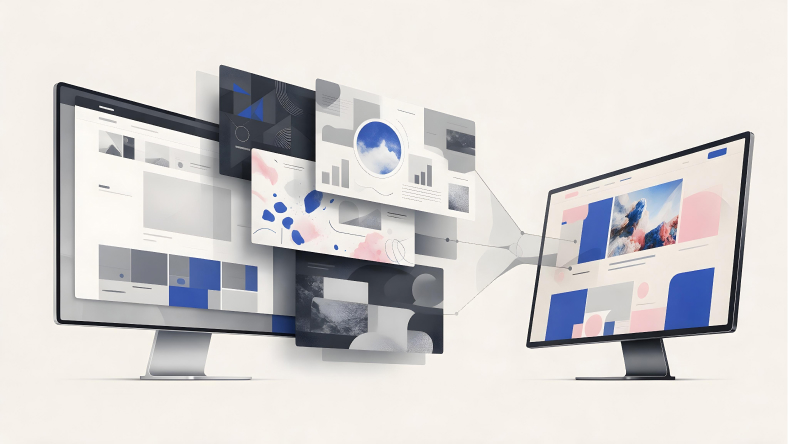
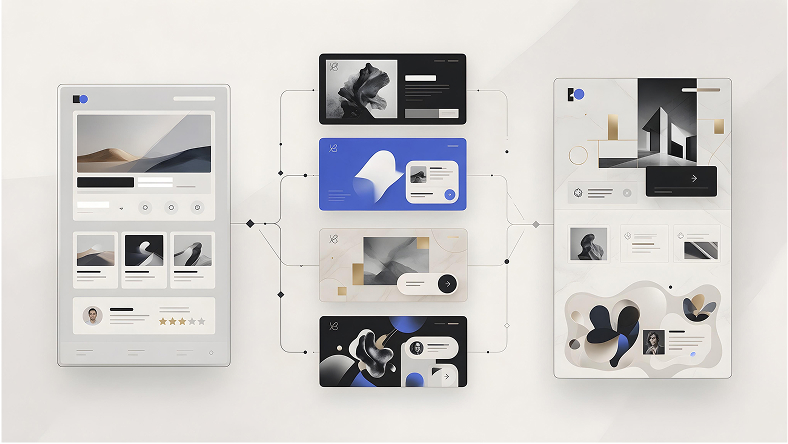
When a client used to arrive with an idea in their head, the idea was soft. Show them four directions and the imagined version quietly dissolves, because it was never really a picture; it was a feeling. They pick the one that actually works.
A rendered draft does not dissolve. You have already seen your idea executed. You are attached to a specific version of it. And the question you ask a designer shifts from “what should this be” to “can you make this better,” which are not the same question and do not produce the same answer.
We see this most often in the direction that costs the most. The AI produced something competent and generic, because it is averaging everything it has seen, and generic is exactly what you cannot afford if you are trying to look different from four competitors in the same town.
The fix is simple, and it is entirely in your hands. Bring the draft, and bring it with a sentence attached: here is what I made; I am not married to it; tell me where it is wrong. The people who say that get noticeably better work than the people who do not, from anyone they hire.
What this actually changed about timelines
One correction, because the claim is everywhere and it is only half true.
AI has compressed production time considerably. The hours it takes to make a thing have genuinely come down.
It has not touched the other half, which is how long it takes to make decisions. In our experience, the gap between a four-week project and a ten-week project is almost never production speed. It is how long it takes for feedback to be gathered, consolidated and sent, and how many people have to agree before anything can move forward.
If you want a fast project, that is the lever. One decision maker, feedback in one document rather than six emails, and a reason attached to each change. We have written more about how to run a design project so it does not stall if that is useful.
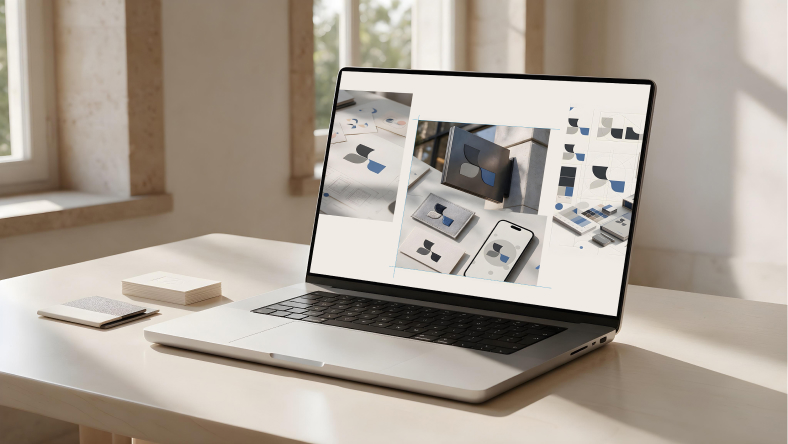
So, what are you actually paying a professional for now
Honestly, less production than before, and more of everything else.
- Judgment about what to build before you pay to build it. Which of the things you want are worth the money, and which are not.
- The parts that have to survive contact with the real world. Print, embroidery, signage, small sizes, single color, a phone in sunlight.
- Systems rather than files. A logo is one file. A brand is the set of rules that lets a sign company, a printer, and whoever builds your next page all produce the same thing without asking you.
- Knowing what you do not know yet. Most of the expensive problems we fix were invisible to the client at the point where they were still cheap.
- Someone who is accountable when it breaks in eight months.
That is a smaller list than it was three years ago. We think it is also a more honest one.
The short version
- The draft you made is a real asset. It tells a designer more than a brief ever did.
- Check your rights and run a trademark search before committing a generated mark to anything physical.
- Test whether you have a product or a prototype using the eight checks above. Items one, six, and eight are the ones that matter.
- Hold your draft loosely when you bring it to someone. It is the single cheapest thing you can do to improve the outcome.
- If a simple page is all your business needs right now, keep your money and spend it on being found.
DesWave works with small and mid-sized businesses on branding and websites. If you have something you built yourself and you are not sure whether it needs refining or rebuilding, send it over, and we will tell you honestly, including when the answer is that you do not need us.