




Some focus on online stores, while others build complex software, business platforms, and custom web applications. This guide compares 25 companies using their services, locations, industries, project experience, and publicly listed pricing where available. It also explains how to compare providers, estimate your budget, and choose a team that fits your goals.
Key Takeaways
- Compare web development companies based on their expertise, portfolio, pricing, client reviews, and project experience.
- Website development costs vary from a few thousand dollars to over $250,000, depending on complexity, features, and integrations.
- Understand the seven stages of web development, from planning and design to testing, launch, and maintenance.
- Choose a reliable development partner that offers clear communication, quality work, website security, and ongoing support.
Quick Comparison of the Top Web Development Companies
The table below gives you a quick way to compare the 25 agencies. Pricing ranges are indicative directory listings, not guaranteed quotes. Actual costs depend on the project, team, location, and required features.
|
Company |
Location listed in reference |
Main strengths |
Pricing |
|
Deswave |
Duluth, Georgia |
Web development with branding and digital marketing. |
|
|
BairesDev |
San Francisco, California |
Dedicated development teams |
$50–$99 per hour |
|
Phenomenon Studio |
Dover, Delaware |
Product design and engineering |
$50–$99 per hour |
|
Anadea |
Las Vegas, Nevada |
Custom web applications |
$25–$49 per hour |
|
Vention |
New York, New York |
Enterprise software and scaling |
$50–$99 per hour |
|
Bacancy |
Miami, Florida |
Outsourcing and flexible teams |
Under $25 per hour |
|
NIX |
Tampa, Florida |
Software engineering and modernization |
$50–$99 per hour |
|
Arbisoft |
Plano, Texas |
Education technology and e-commerce |
$50–$99 per hour |
|
Sigma Software Group |
New York |
Custom development and testing |
$50–$99 per hour |
|
TatvaSoft |
Murphy, Texas |
Full-cycle software development |
Under $25 per hour |
|
Tieto |
Minneapolis, Minnesota |
Product design and cloud solutions |
$50–$99 per hour |
|
Carmatec |
Brooklyn, New York |
Digital transformation and AI |
$18–$25 per hour |
|
Valtech |
New York |
Ecommerce and digital experience |
Not listed |
|
TELUS Digital |
Charlottesville, Virginia |
Digital products and enterprise apps |
$100–$149 per hour. |
|
Cygnet.One |
Princeton, New Jersey |
Compliance and enterprise engineering |
$25–$49 per hour |
|
Mavlers |
San Jose, California |
CMS, ecommerce, and digital marketing |
Under $25 per hour |
|
Brainvire Infotech |
Irving, Texas |
Ecommerce and cloud solutions |
$25–$49 per hour |
|
Computools |
New York |
Custom software and consulting |
$25–$49 per hour |
|
STX Next |
Spring, Texas |
Python-based web applications |
$50–$99 per hour |
|
Fingent |
White Plains, New York |
AI, automation, and custom software |
$25–$49 per hour |
|
ManekTech |
San Antonio, Texas |
Ecommerce and custom development |
Under $25 per hour |
|
Solvd |
Walnut Creek, California |
AI-enabled software and engineering |
$25–$49 per hour |
|
Radixweb |
Frisco, Texas |
SaaS and enterprise modernization |
$25–$49 per hour |
|
Helpware Tech |
San Francisco, California |
Cloud, AI, and secure applications |
$50–$99 per hour |
|
DockYard |
Boston, Massachusetts |
Product strategy and full-stack development |
$150–$199 per hour |
How We Selected These Companies
A useful shortlist should consider more than a company's position in a directory. We focused on the range of services, relevant project experience, industry knowledge, location, pricing transparency, and ability to support a website after launch.
Technical Expertise and Best Web Development Services
A company should have experience with the technologies your project needs. A simple business website may need a content management system, while an online marketplace could require user accounts, payment processing, search tools, and custom integrations.
The best web development services are not always the ones with the longest service list. Look for a team that can explain its approach, show relevant work, and describe how it will test and maintain the finished website.
Portfolio, Clients, and Industry Experience
Review past projects to see whether an agency has worked on websites like yours. A healthcare platform may need stronger privacy controls than a basic portfolio site, while an ecommerce store needs a simple checkout process and reliable payment integration.
Client names can provide useful context, but a recognizable logo alone does not prove that an agency is right for your project. Ask what the team actually delivered and whether it can share a relevant case study.
Pricing, Communication, and Ongoing Support
A clear proposal should explain the project scope, milestones, payment schedule, testing process, and post-launch support.
A company that offers a low hourly rate may still cost more if the project takes longer than expected. Compare the full proposal, not just the rate.
25 Top Web Development Companies to Consider in 2026
1. Deswave
Source: Deswave
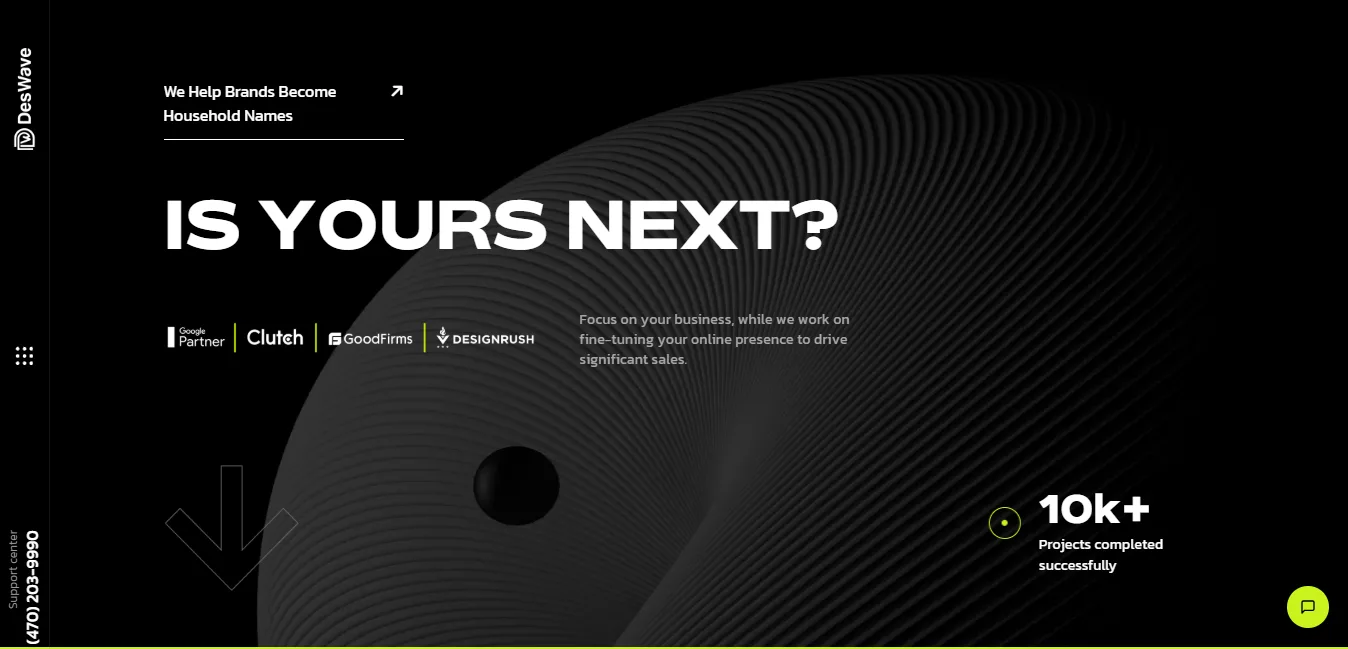
DesWave is a digital agency based in Duluth, Georgia, that combines web development with branding and digital marketing. Its services include website creation, mobile app development, user interface and experience design, and brand-focused creative work. The agency positions its services around helping businesses strengthen their online presence and connect their digital experiences with wider growth goals. Its website describes a project process covering consultation, design, development, and final handover.
Services offered: Website design and development, web and mobile development, UI/UX design, branding, and digital marketing.
Location and Industries: Duluth, Georgia, USA, and DesWave provides its services for businesses and brands broadly. Its public website does not provide a definitive, verified list of industries, so confirm its experience in your sector directly.
Notable clients: The website displays portfolio work and testimonials, but the material reviewed does not establish a complete list of named clients that can be independently verified. Request relevant case studies before making a decision.
Pricing: DesWave offers website development packages with displayed sale prices ranging from $779.40 to $2,699.40. Options include portfolio websites, informational websites, and custom solutions with advanced features and integrations. Prices are subject to change, so confirm current rates and package inclusions directly with DesWave.
Clutch rating: 4.7/5
Founded year: 2019
Great for: Businesses seeking a provider that can combine web development with branding and digital marketing.
Final verdict: DesWave is worth considering if you want your website, visual identity, and marketing activities to work together. Compare its proposal with other agencies and ask for examples of projects similar to yours before making a final choice.
2. BairesDev
Source: BairesDev
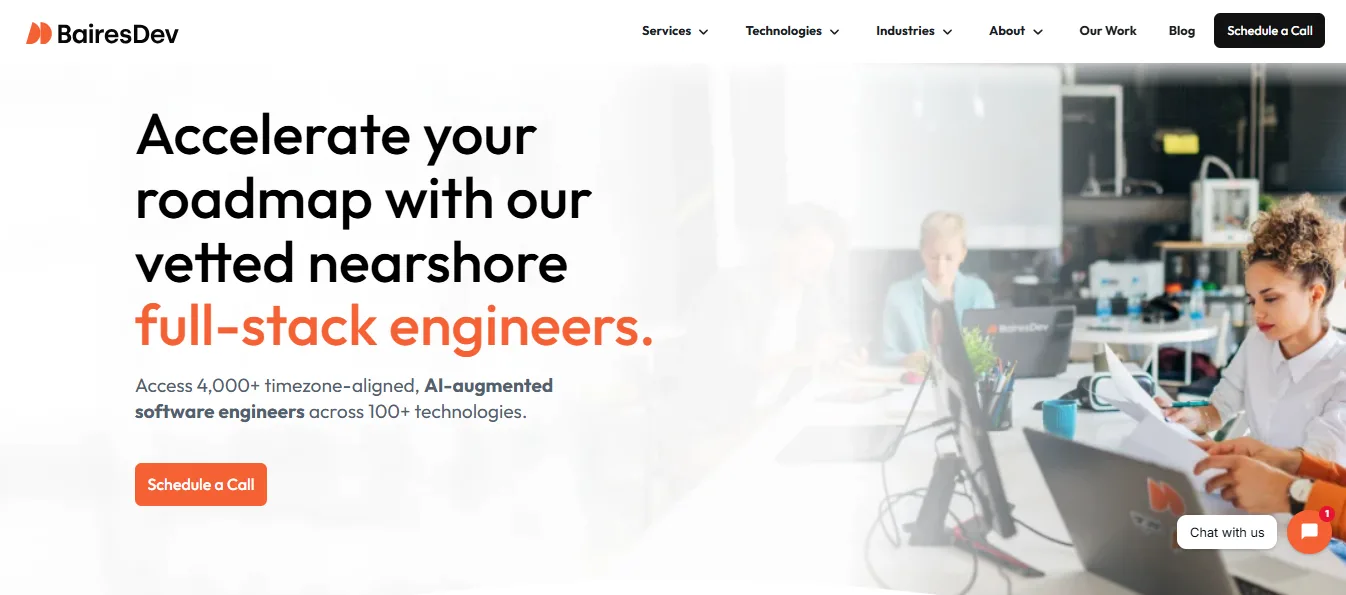
BairesDev provides software development expertise to businesses that need to build digital products or expand their existing engineering teams. Its delivery model allows organizations to access developers and other technical specialists without recruiting every role internally. The company is a potential fit for growing businesses and larger organizations managing complex technology projects. Before hiring, clients should confirm team availability, communication arrangements, project management responsibilities, and how the proposed team will measure progress.
Services offered: Web development, UX/UI design, quality assurance, mobile development, and dedicated engineering teams.
Location and industries: The reference lists San Francisco, California. Its clients span technology, business services, and large enterprises.
Notable clients: IQVIA, Instructure, NextRoll, and Rolls-Royce.
Pros and cons: Its flexible team model can support projects of different sizes. A large engagement may require careful planning to keep communication, responsibilities, and costs under control.
Pricing: Clutch lists BairesDev at $50–$99 per hour and a minimum project size of $50,000+.
Clutch rating: 4.9/5
Founded year: 2009
Great for: Businesses that need to expand an existing engineering team or manage a large web project.
Final verdict: Consider BairesDev when you need access to a wider pool of technical talent instead of hiring every specialist directly.
3. Phenomenon Studio
Source: Phenomenon Studio
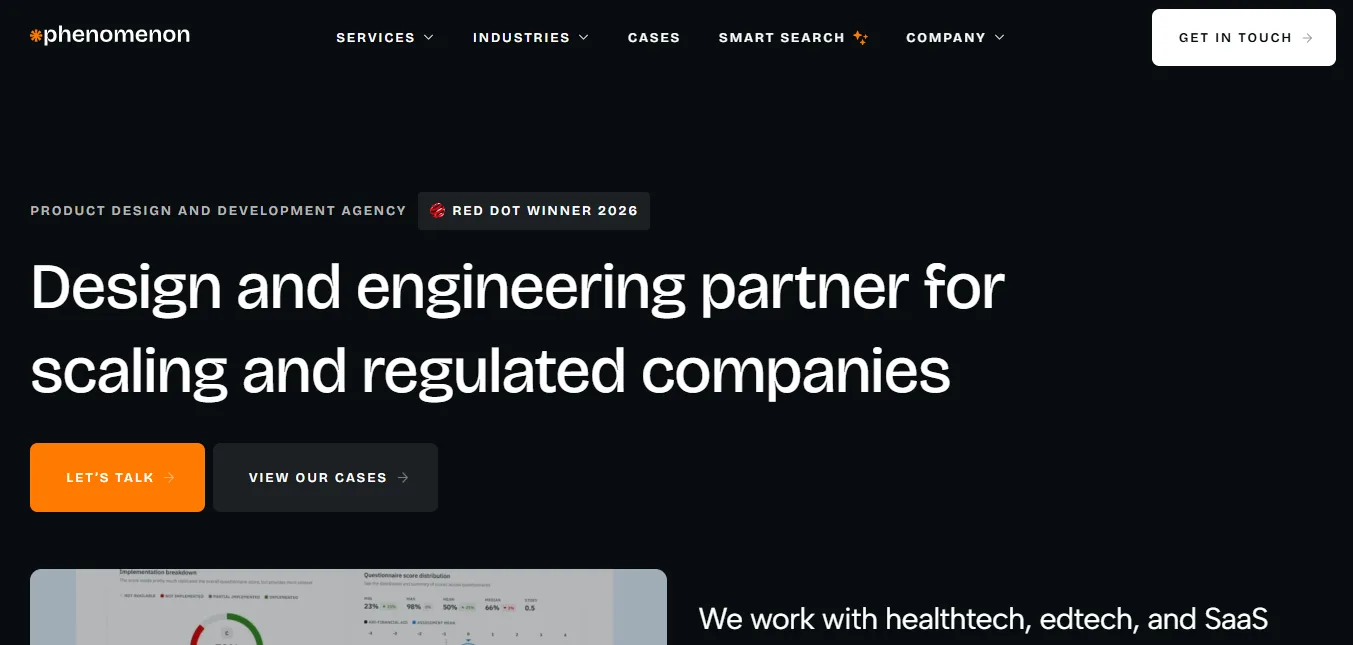
Phenomenon Studio combines digital product design with software development to help businesses create useful, user-friendly online experiences. Its approach connects the early planning and design stages with the technical work needed to build a functioning product. This can be helpful for companies launching a new service, improving an existing platform, or testing a business idea. Prospective clients should review relevant case studies and confirm how design decisions, development milestones, and revisions will be managed.
Services offered: Product strategy, UX/UI design, website development, and custom digital product engineering.
Location and industries: Dover, Delaware, and areas of experience include healthcare, fintech, enterprise software, and education technology.
Notable clients: Hormn, Isora, Artisan, Nooks, and iolo technologies.
Pros and cons: Combining design and engineering can reduce the gap between how a product looks and how it works. Businesses should still confirm the proposed scope, team structure, and delivery schedule.
Pricing: Clutch lists Phenomenon Studio at $50–$99 per hour, with a minimum project size of $10,000+.
Clutch rating: 5.0/5
Founded year: 2019
Great for: Startups and established businesses building a new digital product or redesigning an existing experience.
Final verdict: Phenomenon Studio is a promising option when product design and software engineering need to work closely together.
4. Anadea

Source: Anadea
Anadea develops custom software for businesses that need digital tools tailored to their operations. Rather than relying only on standard website templates, the company can support projects that involve specialized features, connected systems, and custom workflows. Its capabilities make it relevant to businesses building online marketplaces, customer portals, and web applications. Companies evaluating Anadea should explain their requirements clearly and ask how the team will handle testing, future improvements, and maintenance after the product launches.
Services offered: Business analysis, UI/UX design, frontend and backend development, DevOps, quality assurance, and application support.
Location and industries: Las Vegas, Nevada, and its experience includes property technology, online marketplaces, and other digital services.
Notable clients: Listed examples include StreetEasy, Visdeal, Admirals, and Flexidea.
Pros and cons: Its end-to-end approach can help businesses work with one development partner. Custom application projects still require a clear list of features and priorities.
Pricing: Clutch lists Anadea at $25–$49 per hour, with a minimum project size of $10,000+.
Clutch rating: 4.8/5
Founded year: 2000
Great for: Businesses building a marketplace, customer portal, or tailored web application.
Final verdict: Anadea is worth shortlisting if your project requires a complete application rather than a simple collection of web pages.
5. Vention
Source: Vention
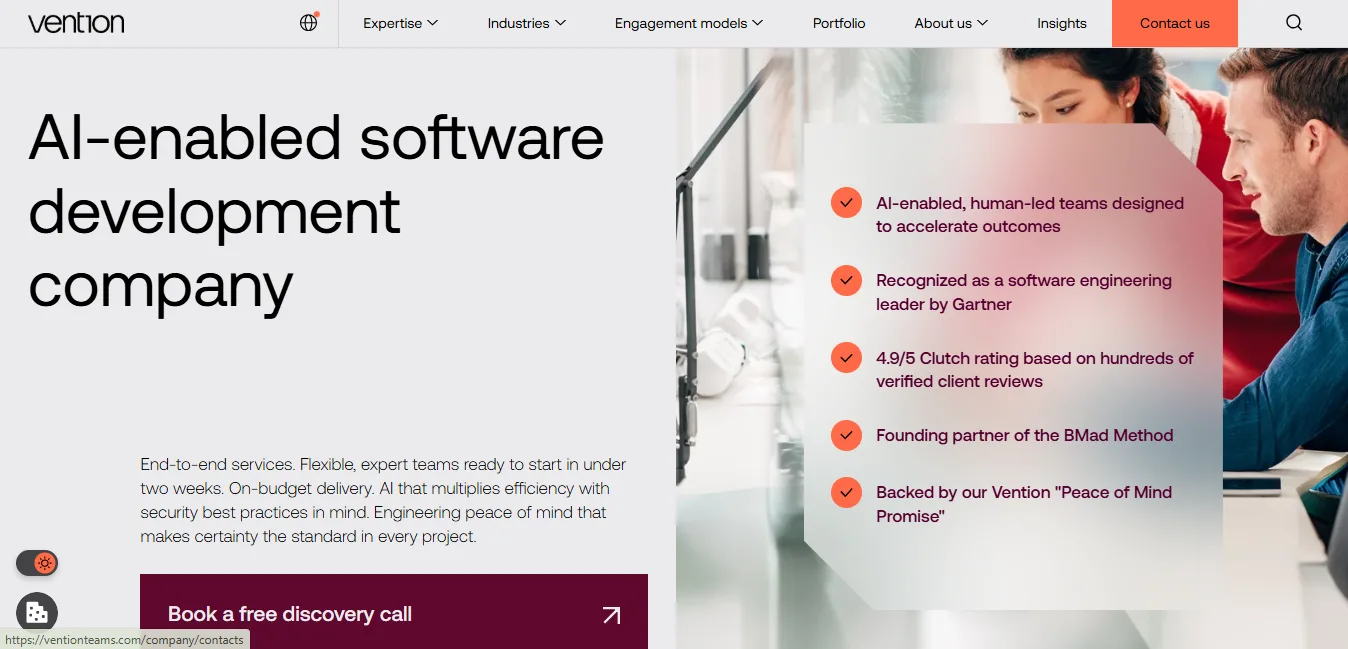
Vention helps businesses develop software products and access technical talent as their engineering needs grow. Its services are relevant to organizations building new platforms, improving existing applications, or adding developers to an established team. This flexible approach can help businesses manage projects that require several technical skills. Before moving forward, clients should agree on the team's responsibilities, delivery schedule, communication process, and expected results so everyone understands how the engagement will work.
Services offered: Custom software, web applications, product engineering, and dedicated development teams.
Location and industries: New York, NY, and its reported areas of experience include fintech, ecommerce, gaming, property technology, education, and healthcare.
Notable clients: Examples include ClassPass, Bevi, Postman, DealCloud, and Merkle.
Pros and cons: Its experience with established companies and long-term projects may suit growing organizations. Businesses should define team responsibilities and delivery milestones before committing to a large engagement.
Pricing: Clutch lists Vention at $50–$99 per hour, with a minimum project size of $50,000+.
Clutch rating: 4.9/5
Founded year: 2002
Great for: Growing businesses and enterprises that need scalable products or extra engineering capacity.
Final verdict: Vention is a strong candidate when your project needs a larger development effort and room to grow.
6. Bacancy

Source: Bacancy
Bacancy provides software development and outsourcing services to businesses that need additional technical support. Its approach can help organizations access developers for specific projects without building a complete in-house team. The company may be suitable for businesses developing an initial product, expanding an existing application, or seeking flexible engineering resources. Before hiring, clients should confirm which specialists will be assigned, how work will be reviewed, and whether project management and quality assurance are included in the proposal.
Services offered: Web development, dedicated developers, custom software, and minimum viable product development.
Location and industries: The directory lists Miami, Florida, and reports a global office network. Its client examples span several business sectors.
Notable clients: The directory lists Edward Jones, The Container Store, Bridgestone, and UPS.
Pros and cons: Flexible hiring arrangements can help businesses control team size and add skills when needed. Confirm who manages quality assurance, communication, and project delivery.
Pricing: Clutch lists Bacancy Technology at under $25 per hour, with a minimum project size of $10,000+. Bacancy also publishes a $22 hourly rate for a senior software developer on its software product development page.
Clutch rating: 4.7/5
Founded year: 2011
Great for: Businesses seeking outsourced development support or an initial product build.
Final verdict: Bacancy is worth exploring when flexibility and budget matter, provided the proposal clearly explains what the team will deliver.
7. NIX

Source: NIX
NIX offers software engineering and technology services for organizations developing new digital products or improving existing systems. Its work can support businesses with custom applications, software modernization, and technical requirements that extend beyond basic website creation. This makes it worth considering when a project involves several systems or needs a broader engineering approach. Prospective clients should explain their current technology setup and ask how the team will manage integrations, testing, deployment, and ongoing technical support.
Services offered: Web development, business analysis, software modernization, system administration, and related IT services.
Location and industries: The directory lists Tampa, Florida, alongside additional international locations. Its experience spans business software and digital products.
Notable clients: Cornerstone, Alienware, Agora, and CarSoup.
Pros and cons: Its wider technology capabilities can help businesses handle connected systems and complex requirements. Smaller projects may not need its full range of services.
Pricing: According to Clutch, NIX is listed at $50–$99 per hour, and its minimum project size is $100,000+.
Clutch rating: 4.8/5
Founded year: 1994
Great for: Businesses modernizing legacy software or building web products that connect with existing systems.
Final verdict: NIX is worth considering when development is part of a larger technology improvement project.
8. Arbisoft

Source: Arbisoft
Arbisoft develops software and digital products for organizations across different industries. Its experience includes technology-driven services and platforms that require reliable engineering, thoughtful design, and ongoing improvement. The company may suit businesses building online services, educational products, or ecommerce experiences that need more than standard website features. When evaluating Arbisoft, businesses should review projects similar to their own and confirm the technologies, team structure, delivery schedule, and support arrangements proposed for the engagement.
Services offered: Web and mobile development, dedicated teams, ecommerce, education technology, and machine learning solutions.
Location and industries: Plano, Texas, and its stated areas of experience include education, ecommerce, and technology-driven services.
Notable clients: The directory names edX, Kayak, Edly, Fixalert, and Schoolgram.
Pros and cons: Its experience with digital learning and ecommerce can be helpful for organizations in those fields. Ask for examples that closely match your project's needs.
Pricing: Clutch lists Arbisoft at $50–$99 per hour, with a minimum project size of $50,000+.
Clutch rating: 4.9/5
Founded year: 2007
Great for: Education platforms, online businesses, and companies seeking a dedicated development team.
Final verdict: Arbisoft deserves consideration when your website is part of a larger digital product or learning platform.
9. Sigma Software Group

Source: Sigma Software Group
Sigma Software Group provides software engineering and consulting services for businesses that need to develop, test, or improve digital products. Its capabilities extend beyond website creation to include technical development and quality assurance. This broad approach can be useful for organizations with complex requirements or products that need regular updates. Before selecting the company, prospective clients should discuss the project's technical goals, identify the specialists required, and establish clear expectations for testing, communication, and delivery.
Services offered: Custom software, web development, software testing, graphic design, IT consulting, and ongoing support.
Location and industries: New York, NY, and reports a wider international presence. Its project examples cover enterprise technology and other business sectors.
Notable clients: Listed names include Formpipe, Zapp, SAS, and Siemens Healthineers.
Pros and cons: Its broad engineering and testing capabilities can support complex projects. Businesses should confirm which specialists will work on the project and how delivery will be managed.
Pricing: Clutch lists Sigma Software Group at $50–$99 per hour, with a minimum project size of $50,000+.
Clutch rating: 4.8/5
Founded year: 2002
Great for: Organizations needing custom software and ongoing engineering support.
Final verdict: Sigma Software Group is a useful option when the project needs more than frontend development alone.
10. TatvaSoft

Source: TatvaSoft
TatvaSoft develops custom software and provides technical support throughout different stages of a project. Its services can help businesses move from planning and development to testing, release, and ongoing maintenance. This makes the company relevant to organizations that want a development partner for more than the initial website build. Businesses considering TatvaSoft should review its experience in their industry, request a detailed project plan, and confirm what support is included once the website or application goes live.
Services offered: Full-cycle development, web applications, custom software, testing, maintenance, and support.
Location and industries: Murphy, Texas, and it reports experience in healthcare, education, logistics, retail, and mining.
Notable clients: Examples include Brightstar, NSW Health, SSE, and Mayflower.
Pros and cons: Its wide industry experience and full-cycle approach may suit businesses seeking a long-term partner. Ask for a detailed plan covering testing, delivery, and post-launch support.
Pricing: Clutch lists TatvaSoft at under $25 per hour, with a minimum project size of $25,000+.
Clutch rating: 4.9/5
Founded year: 2001
Great for: Businesses looking for custom development with a cost-conscious engagement model.
Final verdict: TatvaSoft is worth evaluating if you need a full development process and a partner that can support the product after launch.
11. Tieto

Source: Tieto
Tieto helps organizations design and develop digital products that support business goals and user needs. Its approach brings together product planning, design, and software engineering, making it relevant to projects that require careful coordination between different disciplines. The company may suit established businesses improving digital services or building new customer experiences. Before hiring, clients should review similar projects, discuss how success will be measured, and clarify responsibilities for development, deployment, and future product improvements.
Services offered: Product design, web development, data analytics, cloud solutions, and scalable software engineering.
Location and industries: Located in Minneapolis, Minnesota, and its clients work across industries including education, manufacturing, and consumer products.
Notable clients: The directory lists Cambria, Edmentum, Graco, BASF, and Land O'Lakes.
Pros and cons: Its combination of design, data, and engineering can help organizations build connected digital experiences. Projects that only need basic website updates may require a smaller provider.
Pricing: Clutch lists Tieto at $50–$99 per hour, with a minimum project size of $50,000+.
Clutch rating: 4.5/5
Founded year: 2001
Great for: Established businesses developing digital products or modernizing their web platforms.
Final verdict: Tieto is a sensible candidate when the project needs planning, engineering, and a strong focus on user experience.
12. Carmatec

Source: Carmatec
Carmatec provides digital technology services to businesses looking to develop software, improve online operations, or explore new technology solutions. Its range of capabilities can support projects that combine website development with broader digital improvements. This may be useful for organizations that want to connect their online presence with business processes or custom applications. Prospective clients should verify the experience of the proposed team, define their essential features, and agree on a clear budget and delivery plan.
Services offered: Custom product development, web applications, AI integration, data analytics, and digital transformation.
Location and industries: Located in Brooklyn, New York. Its work includes business technology and digital products across multiple sectors.
Notable clients: Listed examples include Interserver, Netrouting, InmateAid, Samsung, and Design for Health.
Pros and cons: Its broad service offering can be useful for businesses that need both development and technology guidance. Confirm the experience of the team assigned to your specific project.
Pricing: Carmatec's Clutch listing reports hourly rates of $25–$49 and a minimum project budget of $5,000.
Clutch rating: 5/5
Founded year: 2003
Great for: Businesses exploring custom software, automation, or digital transformation.
Final verdict: Carmatec is worth a closer look when you want to combine web development with broader technology improvements.
13. Valtech

Source: Valtech
Valtech is a digital agency that helps organizations improve their online experiences and modernize digital operations. Its work can connect customer experience, ecommerce, design, and technology to support wider business goals. This makes the company relevant to larger retailers and enterprises managing complex digital services. Businesses considering Valtech should define the outcomes they expect, review comparable projects, and request a detailed proposal covering the technical work, project schedule, implementation process, and long-term support requirements.
Services offered: E-commerce development, experience design, application modernization, cloud migration, and enterprise transformation.
Location and Industries: Plano, TX, and its work includes e-commerce and enterprise digital experiences.
Notable clients: The directory lists Sika, LNER, and Securrency.
Pros and cons: Its experience with customer journeys and enterprise systems may benefit large organizations. Public pricing is not provided in the reference, so project costs need direct confirmation.
Pricing: Not listed on website & Clutch profile.
Clutch rating: 4.8/5
Founded year: 1993
Great for: Enterprises and established retailers improving complex digital experiences.
Final verdict: Valtech is a candidate for organizations that need an integrated digital strategy and technical delivery rather than a small standalone website.
14. TELUS Digital

Source: TELUS Digital
TELUS Digital's helps businesses plan, design, and build digital products that serve customers and support business operations. Its product-focused approach can be useful when a company needs to connect research, user experience, and technical development. Organizations with complex customer-facing platforms may find this approach valuable. Before engaging TELUS Digital, businesses should assess whether its capabilities match their project size, discuss the expected return on investment, and confirm the costs and responsibilities associated with ongoing product development.
Services offered: Web and streaming applications, digital strategy, customer experience design, enterprise modernization, and ongoing support.
Location and industries: Charlottesville, Virginia. Examples include consumer services and insurance-related work.
Notable clients: Listed examples include Brightline, Dairy Queen, and Manulife.
Pros and cons: Its strategy and development capabilities can support large digital projects. Its listed hourly rate may put it beyond the budget of some small businesses.
Pricing: Third-party companies list TELUS Digital's hourly rate at approximately $100–$149. Published minimum project budgets are $50,000+.
Clutch rating: 4.9/5
Founded year: 2005
Great for: Large businesses seeking a strategic digital partner for customer-facing products.
Final verdict: TELUS Digitals may be appropriate when quality, strategy, and complex delivery needs justify a higher project budget.
15. Cygnet.One

Source: Cygnet.One
Cygnet. One provides digital engineering and technology services for businesses that need to improve applications, connect systems, or modernize existing software. Its capabilities can be relevant to organizations working with complex processes, enterprise platforms, or demanding technical requirements. The company may be a suitable candidate when reliability and integration are important project goals. Businesses should explain any security or compliance requirements early and ask for a clear plan covering implementation, testing, documentation, and future maintenance.
Services offered: Application modernization, integrations, automation, quality engineering, data analytics, and security-related services.
Location and industries: Princeton, New Jersey. Its work is particularly relevant to businesses with compliance and enterprise technology needs.
Notable clients: The directory names BDO and WTS Hansuke.
Pros and cons: Its compliance and modernization focus can be useful for organizations working with sensitive systems. Businesses should define their regulatory requirements before requesting a proposal.
Pricing: Cygnet. One’s Clutch profile lists hourly rates of $25–$49 and a minimum project budget of $10,000+.
Clutch rating: 4.8/5
Founded year: 2000
Great for: Enterprises modernizing older applications or managing complex compliance needs.
Final verdict: Cygnet. One is worth considering when reliability, integration, and governance are central to the project.
16. Mavlers

Source: Mavlers
Mavlers combines website development with digital marketing services, helping businesses connect their online platforms with broader promotional goals. Its work can include website creation, content management systems, e-commerce platforms, and marketing activities. This combination may be useful for businesses that want their website and marketing efforts to support the same objectives. Before hiring, clients should clarify the balance between development and marketing, identify the platforms they need, and confirm how results and ongoing improvements will be measured.
Services offered: Website design, CMS migration, WordPress, HubSpot, Shopify, SEO, paid media, and email marketing.
Location and industries: Located in San Jose, California. It highlights retail and e-commerce as relevant areas of experience.
Notable clients: Listed examples include Incubeta, Penguin Random House, and Ogilvy.
Pros and cons: Combining development with marketing can simplify coordination. Businesses needing highly specialized software engineering should confirm that the team has the required technical depth.
Pricing: Mavlers’ Clutch profile lists hourly rates of $50–$99 and a minimum website development project budget of $2,500.
Clutch rating: 4.9/5
Founded year: 2012
Great for: Retailers and marketing teams improving e-commerce or CMS-based websites.
Final verdict: Mavlers is a practical option when website improvements and digital marketing need to work together.
17. Brainvire Infotech

Source: Brainvire Infotech
Brainvire Infotech provides software development and digital transformation services for businesses, improving their online operations. Its work can include e-commerce platforms, custom applications, and cloud-based solutions that connect websites with wider business systems. This makes it relevant to retailers and organizations that need their digital tools to work together. Businesses considering Brainvire should assess its experience with their preferred platforms, request examples of similar projects, and confirm how the proposed solution will scale as their needs change.
Services offered: Ecommerce development, full-stack development, cloud services, and digital marketing.
Location and industries: Irving, Texas. Its industry experience includes retail, education, and automotive businesses.
Notable clients: Clients include Southwest, Cole Haan, and Cenomi.
Pros and cons: Its combination of e-commerce and cloud expertise can help businesses connect their websites with wider systems. Ask how the proposed solution will handle future growth and maintenance.
Pricing: Brainvire Infotech’s Clutch profile lists hourly rates of $25–$49 and a minimum project budget of $25,000+
Clutch rating: 4.8/5
Founded year: 2012
Great for: Retailers and growing businesses building online stores or connected digital platforms.
Final verdict: Brainvire is worth shortlisting when your website needs to support wider business operations.
18. Computools
Source: Computools
Computools offers software engineering and technology consulting to organizations that need tailored digital solutions. Its services can help businesses plan and develop applications that address specific operational challenges or customer needs. This makes the company relevant to projects that require more than a standard website or off-the-shelf tool. Prospective clients should explain the problem they want to solve, ask how the team will approach the technical requirements, and agree on measurable deliverables before development begins.
Services offered: Web development, custom software, business consulting, and technology modernization.
Location and industries: New York, NY, and it reports experience in finance, healthcare, retail, logistics, and education.
Notable clients: Listed examples include Caribbean Bank, British Council, Epson, and Finmap.
Pros and cons: Its cross-industry experience can help businesses with complex requirements. Before hiring, ask for relevant case studies and a clear explanation of the delivery process.
Pricing: Computools' Clutch listing reports hourly rates of $25–$49 and a minimum project budget of $25,000+.
Clutch rating: 4.7/5
Founded year: 2005
Great for: Companies seeking custom applications or technology consulting across multiple business functions.
Final verdict: Computools is a candidate for organizations that need both technical implementation and help planning a digital solution.
19. STX Next

Source: STX Next
STX Next specializes in software engineering, with a strong focus on Python-based development. Its capabilities can support web applications and digital products that rely on custom functionality, data processing, or connections with other systems. This makes it a potential fit for businesses with technical requirements that go beyond basic website design. Before hiring, clients should confirm the team's experience with their preferred technology stack and discuss testing, deployment, documentation, and ongoing support.
Services offered: Web applications, Python engineering, cloud solutions, AI-related development, and data analytics.
Location and industries: Spring, Texas, and remote offices in several countries. Its work supports businesses building scalable digital products.
Notable clients: Listed examples include Linde, Macmillan Education, Kyriba, and PixitMedia.
Pros and cons: Its Python expertise can be valuable for data-heavy applications and custom platforms. If your project depends on another technology stack, confirm the team's relevant experience.
Pricing: STX Next’s Clutch profile lists hourly rates of $50–$99 and a minimum project budget of $50,000+.
Clutch rating: 4.7/5
Founded year: 2005
Great for: Businesses building custom web applications that rely on Python or data-focused systems.
Final verdict: STX Next is worth evaluating when the technology behind your website matters as much as its appearance.
20. Fingent
Source: Fingent
Fingent develops custom software and helps businesses explore technology solutions for specific operational needs. Its services can support web applications, automation, and projects involving data or emerging technologies. The company may suit organizations that want to improve existing processes or build a digital product around a clear business problem. Prospective clients should separate essential features from optional additions, review relevant case studies, and ask how the team will control project scope, cost, and delivery timelines.
Services offered: Web development, AI, extended reality, automation, data visualization, and custom applications.
Location and industries: Located in White Plains, New York. Its reported industries include logistics, real estate, finance, manufacturing, and healthcare.
Notable clients: Listed examples include Impact XM, MUSA, Ambit, and TruCare.
Pros and cons: Its mix of traditional software engineering and newer technologies can support specialized projects. Businesses should separate essential features from experimental ones to keep scope under control.
Pricing: Fingent’s Clutch profile lists hourly rates of $25–$49 and a minimum project budget of $25,000+
Clutch rating: 4.9/5
Founded year: 2003
Great for: Businesses building custom applications or exploring automation and data-driven features.
Final verdict: Fingent is a useful candidate when a project requires tailored software rather than a standard website template.
21. ManekTech

Source: ManekTech
ManekTech provides custom software and website development services for businesses with different digital requirements. Its work can include e-commerce platforms, content management systems, integrations, and improvements to existing applications. This range may suit organizations that need a practical development partner for online operations. Before choosing the company, businesses should review its work in the relevant technology area, establish a clear list of deliverables, and confirm how performance, security, and post-launch maintenance will be handled.
Services offered: Ecommerce, content management systems, cloud development, integrations, and legacy software modernization.
Location and industries: San Antonio, Texas. Examples include work with companies across industrial and commercial sectors.
Notable clients: The directory names Kotak, Adani Renewables, ABB, and GEA.
Pros and cons: Its range of services may suit companies building online stores or updating existing systems. Make sure the proposal includes performance testing and support after launch.
Pricing: Rates below $25 per hour.
Clutch rating: 4.5/5
Founded year: 2011
Great for: Businesses looking for ecommerce development or custom application support at a cost-conscious rate.
Final verdict: ManekTech is worth comparing with other providers when affordability and technical flexibility are priorities.
22. Solvd

Source: Solvd
Solvd provides software engineering and product development services for businesses building or improving digital solutions. Its capabilities can support custom applications and projects that require ongoing technical development. This may be relevant to companies that want to expand an existing platform or bring a new digital product to market. Businesses considering Solvd should review projects with similar requirements, discuss the skills needed for their product, and establish clear expectations for testing, delivery, and future updates.
Services offered: Web development, custom software, AI-related solutions, and product engineering.
Location and industries: Walnut Creek, California, alongside international locations. Its listed projects include consumer technology, finance, and public transport-related services.
Notable clients: Examples include MyFitnessPal, Under Armor, NerdWallet, and Houston Metro.
Pros and cons: Its engineering and AI experience may help businesses build sophisticated products. Confirm how AI features will be tested, secured, and maintained before adding them to the project.
Pricing: Solvd’s Clutch profile lists hourly rates of $100–$149 and a minimum project budget of $50,000+.
Clutch rating: 5.0/5
Founded year: 2011
Great for: Companies developing custom applications or expanding an existing digital product.
Final verdict: Solvd deserves consideration when your project requires a combination of software engineering and modern technology capabilities.
23. Radixweb

Source: Radixweb
Radixweb offers custom software development and technology consulting for businesses creating new products or modernizing existing systems. Its services can support web applications, software platforms, and projects that require long-term technical planning. This makes the company worth considering when a business needs a solution that can evolve over time. Prospective clients should explain their current systems, identify any required integrations, and ask for a proposal that covers development, testing, deployment, and maintenance.
Services offered: Web development, SaaS products, software modernization, consulting, and automation.
Location and industries: Frisco, Texas. It reports experience across fintech, healthcare, education, retail, and travel.
Notable clients: Listed examples include Visiun, Tectatom, and Stigler Printing.
Pros and cons: Its broad industry experience can help businesses with specialized software needs. A clear project scope is important when several systems or business processes must be connected.
Pricing: Radixweb’s Clutch profile lists hourly rates of $25–$49 and a minimum project budget of $25,000+.
Clutch rating: 4.8/5
Founded year: 2000
Great for: Businesses developing SaaS platforms or modernizing existing applications.
Final verdict: Radixweb is worth evaluating when you need a partner that can help with both product development and future improvements.
24. Helpware Tech

Source: Helpware Tech
Helpware Tech provides software engineering and digital transformation services for organizations with specialized technology needs. Its capabilities can support custom applications, cloud projects, and solutions that require attention to security and reliability. This may make it relevant to businesses managing complex systems or sensitive information. Before hiring, organizations should explain their security requirements, verify the team's experience with the relevant technology, and confirm how testing, documentation, deployment, and ongoing support will be handled.
Services offered: Product discovery, web development, AI, cloud, DevOps, custom software, and technology consulting.
Location and industries: San Francisco, California. It highlights healthcare, fintech, and pharmaceutical work, where data protection can be especially important.
Notable clients: The reference lists LUCIRA, Dobo, Healthmind, Citroneer, and WandaHealth.
Pros and cons: Its security-focused capabilities may be helpful for regulated businesses. Buyers should verify which certifications and compliance controls apply to the specific project.
Pricing: Helpware Tech lists hourly rates of $50–$99 and a minimum project budget of $25,000+
Clutch rating: 4.9/5
Founded year: 2015
Great for: Organizations developing secure applications or modernizing business systems with complex requirements.
Final verdict: Helpware Tech is a candidate when security, cloud infrastructure, and custom engineering are important parts of the project.
25. DockYard

Source: DockYard
DockYard is a digital product consultancy that combines planning, design, and software engineering. Its approach can help businesses understand a product's purpose, improve the user experience, and develop the technology needed to support it. This makes the company relevant to organizations building complex applications rather than simple informational websites. Prospective clients should review its product work, assess whether its approach suits their budget, and clarify how strategy, design, engineering, and future improvements will be coordinated.
Services offered: Product strategy, UX design, full-stack engineering, and web application development.
Location and industries: Boston, Massachusetts. Examples include entertainment, education, and digital product businesses.
Notable clients: Listed examples include Netflix, Mariana Tek, CollegeVine, and McGraw Hill.
Pros and cons: Its product-focused approach can help businesses solve complex problems before development begins. Its higher listed rate may not suit smaller projects with limited budgets.
Pricing: Clutch lists DockYard at $150–$199 per hour, with a minimum project size of $25,000+.
Clutch rating: 5.0/5
Founded year: 2010
Great for: Organizations that need product strategy and senior engineering for a complex web application.
Final verdict: DockYard is worth considering when you need a partner to help shape a product and build it, not just write the code.
How to Choose Among the Top Web Development Companies
Finding the right partner starts with understanding what you want the website to achieve. Before evaluating the Top web design companies in 2026, list your must-have features, target customers, budget, preferred launch date, and plans for future growth. Then compare proposals based on how well each company addresses those needs.
Match the Agency to Your Project
A small business website, an online store, and a custom web application require different skills. A business website may need a content management system, contact forms, and search-friendly pages. An ecommerce project may require secure payments, inventory tools, and customer accounts. A custom application may need databases, user permissions, and integrations with other software.
When comparing top web development agencies, ask for examples of similar projects. A company with experience building your type of product may understand common challenges more quickly.
Review Portfolios and Client Feedback
A portfolio shows what an agency has built, but look beyond attractive screenshots. Check whether its websites work well on phones, load quickly, provide clear navigation, and make important tasks easy.
Client reviews can also reveal how a team handles feedback, deadlines, and unexpected problems. If possible, ask for a reference from a previous client with a project similar to yours. This helps you judge whether the best web development company for your needs can deliver more than a polished sales presentation.
Check Communication and Project Management
Before signing a contract, find out who will manage the project, how often you will receive updates, and where you can review progress. Ask how the team handles changes to the scope and what happens if a deadline is missed.
A reliable website development company should explain technical choices in simple language. You should understand what is being built, how decisions are made, and what your team must provide to keep the project moving.
Confirm Ownership, Security, and Maintenance
Your agreement should explain who owns the finished code, design files, domain, content, and any paid software licenses. It should also cover backups, security updates, bug fixes, and ongoing support.
Ask whether the agency will train your team to manage content and whether you can move the website to another provider later. These details matter because a website is not finished forever on launch day.
How Much Does It Cost to Develop a Website in 2026?
Website development costs depend on the number of pages, design requirements, technical features, integrations, and the experience of the team you hire. The following ranges are broad planning estimates, not guaranteed market rates or quotes from the 25 companies above.
|
Website type |
Illustrative project budget |
|
Basic informational website |
$1,000–$5,000 |
|
Professional small-business website |
$3,000–$10,000 |
|
Custom-designed marketing website |
$5,000–$20,000 |
|
Ecommerce website |
$5,000–$30,000+ |
|
Custom web application |
$15,000–$100,000+ |
|
Large enterprise platform |
$50,000–$250,000+ |
The ranges can overlap because a small site with complex integrations may cost more than a larger site built from a standard template. Hosting, maintenance, premium software, content creation, and marketing may also add to the total.
What Affects the Final Price?
Project complexity: More features, user roles, integrations, and custom workflows usually require more development and testing.
Team location and experience: Hourly rates vary by market and specialist skill. A lower rate does not always mean a lower final cost.
Design and content: Custom illustrations, user research, copywriting, and advanced animations can increase the budget.
Maintenance: Websites need security updates, backups, bug fixes, and occasional improvements. Include these costs in your long-term plan.
When reviewing web development companies in USA, compare their complete proposals instead of choosing the lowest advertised hourly rate. Ask each agency to break down the cost, milestones, assumptions, and exclusions. This makes it easier to compare offers fairly.
What are the 7 Stages of Web Development?
Most web projects follow seven broad stages, although teams may combine some of them or repeat steps as they learn more.
-
Planning: Define the purpose, audience, budget, and goals.
-
Requirements: Decide which pages, features, and integrations are needed.
-
Design: Plan the layout, navigation, and visual style.
-
Development: Build the frontend, backend, database, and other features.
-
Testing: Check functionality, performance, accessibility, security, and mobile compatibility.
-
Launch: Publish the website and make sure everything works correctly.
-
Maintenance: Fix issues, apply updates, monitor performance, and improve the site over time.
Good planning helps prevent expensive changes late in the project. Testing is just as important as coding because even a beautiful website can fail if forms, payments, or navigation do not work properly.
What Are the Two Main Types of Web Development?
The two main types are frontend development and backend development.
-
Frontend development: Builds the parts visitors see and use, such as menus, buttons, forms, page layouts, and animations.
-
Backend development: Handles the behind-the-scenes work, including databases, accounts, permissions, payment processing, and business rules.
Full-stack developers work across both areas. Some projects can be handled by a small full-stack team, while larger applications may need separate frontend, backend, design, testing, and infrastructure specialists.
What Are the 12 Types of Websites?
Different websites serve different purposes. Here are 12 common types and what they do.
-
Business websites: Introduce a company, its services, and contact details.
-
Ecommerce websites: Let customers browse products and place orders online.
-
Portfolio websites: Display a person's or company's work.
-
Blogs: Publish articles, guides, news, and opinions.
-
Educational websites: Provide lessons, courses, and learning materials.
-
News websites: Share current events and reporting.
-
Nonprofit websites: Explain a cause and support donations or volunteering.
-
Entertainment websites: Offer videos, games, music, or other media.
-
Membership websites: Give registered members access to special content.
-
Web portals: Bring information and tools together for specific users.
-
Community websites: Help people discuss shared interests and connect.
-
Personal websites: Share an individual's background, interests, or projects.
Some websites combine several types. For example, a business website may include a blog, an online store, and a customer portal. The right design depends on the tasks visitors need to complete.
Final Thoughts
Choosing the right partner means looking beyond marketing claims. Compare relevant projects, technical skills, communication, pricing, and support options. The Top Web Development Companies for your business are those that understand your goals and can deliver a reliable solution within your budget.

Shortlist a few top web development agencies, request detailed proposals, and check references. The best web development company for a startup may not suit a large enterprise, just as the best web development services for an ecommerce store may differ from those needed for a custom business application.
For businesses comparing web development companies in USA, location is only one factor. Technical expertise, clear contracts, and dependable communication matter just as much. Evaluate Top Web Development Firms against your requirements and choose a partner that can support your website beyond launch.
Finally, consider your wider business strategy. Alongside Website Development Services, relevant Brand Strategy Services can help maintain a consistent online presence. If you're considering providers such as DesWave, review their current offerings and portfolio to see whether they fit your goals.
Define your requirements, compare proposals, and choose a team that can turn your ideas into a useful, dependable website.
Frequently Asked Questions
1. Which company is best for web development?
The best web development company depends on your project's size, budget, technical needs, and support requirements. Deswave may suit businesses building custom applications, while Mavlers may be worth considering for ecommerce and marketing-focused websites. Compare at least three proposals and review similar projects before making your decision.
2. What are the top 10 web development companies in the world?
There is no single global ranking that fits every project. From this list, ten companies worth researching are Deswave, BairesDev, Phenomenon Studio, Anadea, Vention, NIX, Arbisoft, Sigma Software Group, WillowTree, and DockYard. These are examples to evaluate, not a definitive ranking of the world's best providers. The right choice depends on your project's technical requirements, budget, industry, and ongoing support needs.
3. Who are the top 3 web developers in the USA?
The right three providers depend on the type of website you want to build. For a starting shortlist, consider Vention for larger engineering projects, DockYard for product strategy and custom applications, and TELUS Digital for complex digital experiences. Check their current locations, team availability, pricing, and relevant case studies before hiring.
4. What are the 7 stages of web development?
The seven common stages are planning, requirements gathering, design, development, testing, launch, and maintenance. Following these steps helps teams identify problems early, organize the work, and keep the finished website reliable.
5. What are the two main types of web development?
The two main types are frontend and backend development. Frontend work covers what visitors see and interact with, while backend work handles data, accounts, server logic, and other functions behind the scenes. Full-stack development combines both.
6. What are the 12 types of websites?
Common types include business websites, ecommerce stores, portfolios, blogs, educational sites, news sites, nonprofit websites, entertainment sites, membership sites, web portals, community sites, and personal websites. The right type depends on your audience and the purpose of the site.
7. How much does it cost to develop a website?
A simple website may cost a few thousand dollars, while a custom web application can cost tens of thousands of dollars or more. The price depends on design, features, integrations, development rates, and ongoing support.
When reviewing web development companies in the USA, request a written quote with clear deliverables. The best web development services should match your requirements and budget, not simply offer the lowest rate. A website development company should also explain maintenance costs, ownership, and what happens when you need future changes.